Showing posts with label medications. Show all posts

Tuesday, July 22, 2014

Learning and Behavior Series Part 5: Medications

This is the 5th post in a series of blogs on Learning and Behavior. It will focus on prescription treatments used primarily for ADHD.


There are many parts to the treatment of ADHD including behavior modifications; school accommodations; optimizing nutrition, sleep, and other healthy habits; and supplements -- all covered in previous posts in this series. This one will cover common medications that have been approved or are commonly used for the treatment of ADHD. I am not going to go into how to diagnose ADHD here, but it is of course of utmost importance to have the correct diagnosis before medication is considered.

There are many treatments out there that are not approved for the purpose being used, but if done properly might be a good consideration. Physicians sometimes use treatments that have not been approved for the purpose because they know from experience that it works or they are at a loss from approved treatments failing and they need to try something else.
One example is using a shorter acting form of guanfacine (Tenex) that has not been approved to treat ADHD, but is less expensive than the longer acting form (Intuniv) that is approved for ADHD.

Another common example is the use of albuterol, a medicine that helps breathing with conditions that cause wheezing. It is not approved for use under 2 years of age, but it is commonly used for younger children with difficulty breathing -- and it helps them breathe, which might keep them out of the hospital and off of supplemental oxygen.

I do not think that all non-approved medicines are good or bad. It is a very individual decision of what medicines to use. Discuss with your doctor if a treatment is approved or if they are using something that is not. Although this is relatively common among people who treat children because many drugs have not been tested in children and have been "grandfathered" into use through experiences that show benefit, be sure the provider is not picking something that has no basis or supporting evidence, especially if he or she profits from the treatment.

Be very wary of anyone who promises a cure - if one really existed everyone would use it.

Medications approved to treat ADHD


Medications to treat ADHD fall into the following categories:

  • Stimulants
  • Methylphenidates (Ritalin©, Focalin©, Concerta©, Daytrana©, Metadate©, Quillivant©

  • Amphetamines (Adderall©, Vyvanse©, dexedrine) 

  • Non-stimulants
  • Atomoxetine (Strattera©
  • Guanfacine (Intuniv©
  • Clonidine (Kapvay©
  • Others are used off-label (no FDA approval for the purpose of ADHD treatment): Tenex, Catapres patch, antidepressants, and antipsychotics

When a medication is needed to control symptoms of ADHD, the first line medications are the stimulants unless there are contraindications. Non-stimulant medications are not found to be as effective as stimulants in the majority of children, but they do have a place in the treatment plan for some children. They are sometimes used in addition to stimulants for optimal results. For information on how these medicines, see A Guide to ADHD Medications. It reviews how stimulants act on dopamine and norepinephrine and various time release patterns of different medicines.

Side Effects

Parents usually worry about medication side effects, which is a very legitimate concern. Overall the medicines listed above are very well tolerated. If a child has side effects to one stimulant, they can usually do well on a different class (methylphenidate vs amphetamine). I often hear concerns that parents don't want their kids changing their personalities or becoming "zombies". If the right medicine is used at the appropriate dose, this is usually not a problem. Finding that right medicine and right dose might take some trial and error, but work with your prescriber to get to the right one for your child.

The most commonly observed side effects of stimulants are:


  • Decreased appetite – Appetite is often low in the middle of the day and more normal by supper time. Good nutrition is a priority, so encourage kids to eat the healthy "main course" first and leave the dessert out of the lunchbox. Short acting meds improve mid day appetite since they wear off around lunch time. Kids are often very hungry in the evenings when medicines wear off, so encourage healthy foods at that time. I have also seen some kids who have a really hard time off medicine sitting down to eat actually gain weight better on medicine because they can finish the meal.
  • Insomnia – Trouble sleeping is common with ADHD, with or without medicines. If it is due to the stimulant medicine, trouble sleeping may be relieved by taking it earlier in the day.
  • Increased irritability -- Moodiness is especially common as the medication wears off in the afternoon or evening and in younger children. It makes sense if you consider that all day they are able to focus and think before acting and speaking, but then suddenly their brain can't focus and they act impulsively. Typically kids learn to adjust to the medicine wearing off as they mature. Sometimes just giving kids 30 minutes to themselves and offering a healthy snack can help. Cognitive behavioral therapy can help. 
  • Anxiety -- Anxiety does occur with ADHD and might be under-appreciated before the ADHD symptoms are treated. When kids can focus better, they might focus more on things that bother them, increasing anxiety. It is also possible that anxiety is misdiagnosed as ADHD, which is one reason for stimulant medication failure.
  • Mild stomach aches or headaches -- Stomach aches and headaches are occasionally noted with stimulant medications. It is my experience that they are most common with a new medication or a change in dose. Because these have many causes, it can be hard to determine if they are really from the medicine or another cause. If they persist with the medicine, it might be needed to change to another.
  • Tics - Tics are related to treated and untreated ADHD. People with ADHD are more likely to have tics than the general population. It was once thought that tics were caused by the stimulant medicines, but it is now thought that they happen independent of the medicine, and medicines might even help treat the tics.
  • Growth -- Weight gain can be difficult for some kids on stimulant medications due to the appetite suppression on the medicine. Studies have shown a decreased final adult height of about 1-2 cm (1/2 - 1 inch), which most agree is not significant compared to the benefits in self esteem, academics and behavior children gain on stimulants.

Rare side effects of stimulants include hallucinations and heartbeat irregularities


  • I have only seen two children who could not tolerate stimulants due to hallucinations, but it is very scary for the family when it happens. Unless there is a significant family history of them, I don't know a way to predict which child is at risk. These are a contraindication for continuing that medication, but another type of stimulant or medication can be considered. 
  • Cardiac (heart) problems are overall a rare complication of stimulants and often times are not a contraindication to continuing the stimulant medicine. There is a small increase in blood pressure and heart rate, both of which should be monitored regularly while on treatment and if the treatment is stopped. 

A cardiologist should be considered to further evaluate a patient prior to starting a stimulant if there is any of the following:

  • Shortness of breath with exercise not due to a known non-cardiac cause, such as asthma
  • Poor exercise tolerance compared to children of the same age and conditioning 
  • Excessively rapid heart rate, dizziness, or fainting with exercise 
  • Family history of sudden cardiac death or unexplained death (such as SIDS) 
  • Family or personal history of prolonged QT syndrome, heart arrythmias, cardiomyopathy, pulmonary hypertension, implantable defibrillator or pacemaker 

Common side effects for the non-stimulants include the following:

  • Atomoxetine can cause initial gastroesophageal complaints (abdominal pain, decreased appetite), especially if the dose is started too high or if it is increased too rapidly. It can also cause tiredness and fatigue when it is first started or if the dose is increased too quickly. It can increase the blood pressure and heart rate, both of which should be monitored regularly during treatment with atomoxetine. There is an increased incidence in suicidal thoughts, though uncommon, so children should be monitored for mood issues on this medication. A rare complication of atomoxetine is hepatitis (inflammation of the liver with yellow jaundice and abnormal liver function labs). The hepatitis resolves with stopping the atomoxetine. 
  • Guanfacine and clonidine both cause fatigue and tiredness, especially when first starting the medication or with increases in dose. Clonidine is often used at bedtime to help kids with ADHD sleep. Both of these medications can lower the blood pressure and heart rate, and these should be monitored closely while on guanfacine or clonidine.


Getting Started


The first step in treating ADHD is getting a proper diagnosis. This should be done with input from parents and teachers since symptoms should be present in at least two settings. ADHD symptoms overlap with many other conditions, and if the diagnosis is not correct, medications are more likely to cause side effects without benefit. Do not jump into medication until the symptoms have been fully evaluated and a proper diagnosis is made according to DSM criteria.

Stimulant medicines are considered first line treatment for ADHD in kids over 5 years of age. There are short acting and long acting formulations available for each type of stimulant. There are advantages and disadvantages to each. Short acting medications tend to last about 4 hours, so can be given at breakfast, lunch, and after school, allowing for hunger to return as each wears off to help kids maintain weight. They are often used later in the day after a long acting stimulant wears off for teens who need longer coverage. Long acting medicines tend to last between 6 and 12 hours, depending on the medicine and the person's metabolism. The benefit is that people don't need a mid-day dosing, which for school kids means avoiding a daily trip to the school nurse, which can be socially non-acceptable for older children. It is also easier to remember once/day medication versus multiple times/day dosing. The downside is that some children don't eat well mid-day with long acting medicines.

In general it is recommended to pick one of the stimulant medicines and start low and titrate to best effect without significant side effects. Feedback on how the child is able to focus and stay on task, and reports of other behavioral issues that were symptoms in the first place should be received from teachers and parents, as well as the child if he is able. There are many things to consider that affect focus and behavior that are not due to the medicine: sleep, hunger, pain, illness, etc. It takes at least a few days to identify if the medicine is working or not or if other issues are contributing to the focus and behaviors. The younger the child the longer I usually advise staying on a dose so a parent has a chance to hear from the teacher how things are going. I usually don't increase faster than once/week. I rely more on the student's report in middle and high school, since those students can be more insightful and they have so many teachers throughout the day that most teachers are not as helpful. Older students who are in tune with their problems and how they are responding to the medicine might be able to increase every few days, as long as there are no confounding factors that could influence symptoms, such as change in sleep pattern, big test or other stressor, or illness.


Which medicine to choose?


As you see above, there are two classes of stimulants, methylphenidates and amphetamines. While some children respond better to methylphenidates, others to amphetamines, some do equally well on either, and some cannot tolerate either. It is not possible to predict which children will do best on any type, but if there is a family history of someone responding well (or not) to a medicine, that should be taken into consideration of which to start first.


Another thing to consider is whether or not a child can swallow a pill. Some of the medicines must be swallowed whole. If you aren't sure if your child can swallow a pill, have them try swallowing a tic tack. Use a cup with a straw, since the throat is narrowed when you tilt your head back to drink from an open cup. Another option is to put it in a spoonful of yogurt or applesauce and have your child swallow without chewing. If your child cannot swallow a tic tac, you can choose a medicine that doesn't need to be swallowed. Some come in liquid or chewable formulations. Some capsules can be opened and sprinkled onto food, such as applesauce or yogurt. There is a patch (placed on the skin) available for the methylphenidate group.


I would love to say that cost shouldn't matter, that we pick the medicine based purely on medical benefit, but cost does matter. Before you go to the doctor to discuss starting medicine (this or any medicine for any condition) look at the formulary from your insurance company. All other things being equal, if one medicine is not covered at all (or is very expensive) and another is covered at a lower tier, it is recommended to try the least expensive option first. Of course, if the least expensive medicine fails, then a more expensive one might be the right choice. Also check to see if a medicine requires a prior authorization, which might require that other medicines are tried first.

The ADHD Medication Guide is a great resource to look for generics (marked with a "G"), which must be swallowed whole or can be opened or chewed (see the key on page 2). The age indications listed on page 2 are those that have FDA approval at the ages listed, but there are a lot of times that physicians use medicines outside the age range listed. Some do not even have an age indication listed. These ages are due to testing results, and can be limited because one age group might not have been tested for a specific medicine. Note that the 17 year and adult medicines are different. Is there really a difference between a 17 and an 18 year old? Not likely.


Finding the right dose


It is recommended to start with one of the two main classes of stimulants with a low dose, and slowly increase to find the best dose. If that stimulant doesn't work well or has side effects that are not tolerated, then change to the other class of stimulant. If that one does not work, you can try a different medicine from the class of stimulant that worked best. If the third medicine doesn't work, then a non-stimulant can be tried. I also recommend re-evaluating the original diagnosis at this point, since ADHD might not be the cause of the issues and finding the right cause can lead to a better treatment.

Titrating the medicine goes something like this:

  • If symptoms are well controlled and there are no significant side effects, the medicine should be continued at the current dose. 
  • If symptoms are not well controlled and there are no side effects that prohibit increasing, the dose should be increased as tolerated. 
  • If symptoms are not well controlled (i.e. room for improvement) but there are side effects that prohibit increasing the medicine, consider a longer period of watching on this dose versus changing to a new medicine.

Things to consider


Time Off: Once a good dose is found, parents often ask if medicines need to be taken every day. Drug holidays off stimulants were once universally recommended to help kids eat better and grow on days off school. Studies ultimately did not show a benefit to this, and some kids really can't take days off due to behavior issues, including safety issues while playing (or driving for older kids). It also seems that when kids are off medicine they do not have good self esteem due to repeated failures, so taking medicine regularly is important to them.

When kids can manage their behavior adequately, it is not wrong to take days off. Stimulants work when they work, but they don't build up in the body or require consistent use. (This is not true for the non-stimulants, which are often not safe to suddenly start and stop.) Some kids fail to gain weight adequately due to appetite suppression on stimulants, so parents will take drug holidays to allow better eating. Days off the medicine also seems help to slow down the need for repeated increases in dosing for people who are rapid metabolizers.

Talk to your child's doctor if you plan on not giving your child the medicine daily to be sure that is the right choice for your child.

Remembering the medicine: It is difficult to get into the habit of giving medicine to a child every day. I wrote an entire blog on remembering medicines. My favorite tip is to put the pills in a weekly pill sorter at the beginning of each week. This allows you to see if you're running low before you run out and allows you to see if it was given today or not. These medicines should not be kept where kids who are too young to understand the responsibility of taking the medicine have access.

Controlled substances: Controlled substances, such as stimulants, cannot be called in or faxed to a pharmacy. They cannot have refills, but a prescriber can write for either three 30 day prescriptions or one 90 day prescription when they feel a patient is stable on a dose. Stimulants are not controlled substances because of increased risks to the individuals it is prescribed for, but because they have a street value -- teens often buy them from other teens as study drugs. This can be very dangerous since it isn't supervised by a physician and the dose might not be safe for the purchaser. It is of course illegal to sell these medicines. The DEA does monitor these prescriptions more closely than others. If the prescription is over 90 days old, many pharmacists cannot fill it (this will vary by state), so do not attempt to hold prescriptions to use at a later time.

Acids and Stimulants: It has been recommended that you shouldn't take ascorbic acid or vitamin C (such as with a glass of orange juice) an hour before and after you take medication. The theory is that ADHD stimulants are strongly alkaline and cannot be absorbed into the bloodstream if these organic acids are present at the same time. High doses of vitamin C (1000 mg) in pill or juice form, can also accelerate the excretion of amphetamine in the urine and act like an "off" switch on the med. In reality  have never seen this to be an issue. If anyone has noticed a difference in onset of action or effectiveness of their medicine if they take it with ascorbic acid or vitamin C, please post your comment below.

When Mom and Dad disagree: It is not uncommon that one parent wants to start a medication for their child, but the other parent does not. It is important to agree on a plan, whatever the plan is. Have a time frame for each step of the plan before a scheduled re-evaluation. If the plan isn't working, then change directions. If kids know it is a disagreement, they might fear the medicine or think that needing it makes them inferior or bad. Do not talk about the diagnosis as if it's something the child can control - they can't. Don't make the child feel guilty for having this disorder. It isn't fair to the child and it only makes the situation worse.


Having the medicine when you need it-- 


Refills: There is nothing more frustrating for a parent and child than to realize that there's a big test tomorrow and you have no medicine left and you're out of refills. Be sure to know the procedure for refills at your doctor's office. By federal law we cannot give more than 3 month's worth of a stimulant medicine. They cannot be called in to a pharmacy. In my office we see patients at least every 3 months (more often when starting a medicine or if changes are needed). I advise that they schedule the next appointment as they leave the office so they don't forget to schedule. I make these appointments longer than standard "sick" appointments, so it is hard to sneak one in on the same day. 
Travel: It is very important to plan ahead prior to travel. If you forget your child's stimulant, no one can call out a prescription since it is a controlled substance. You must plan ahead so that if a refill will be needed during the trip you will either be able to fill a prescription you have on vacation or you will need to fill the prescription in advance. Most people can get a prescription 7 days prior to the 30 day supply running out, but not sooner, so you might need to fill a couple prescriptions a few days earlier in the month each to have enough on hand to make it through your vacation. It takes planning! If you are out of town and you realize you forgot your child's non-stimulant, call your doctor to see if they will call it out. Many of the non-stimulants are not safe to suddenly stop, so they are likely to call it out. Insurance is not likely to pay for these extra pills though if it was recently filled. 
Lost prescriptions: We are able to give up to three prescriptions at one time, but most pharmacists will not keep the prescriptions. This means that you must know where the prescriptions are and not lose them for 3 months. Lost prescriptions are handled differently by different prescribers, but all should take them seriously due to the controlled substance rules of the DEA. If a parent reports losing them frequently, that usually leads to consequences, so be sure you know how your doctor handles this situation. I will generally allow a parent to write a letter documenting the lost prescription and I document this in the medical record in a way that is easy to see at future visits. If this repeats, I will not be able to continue to prescribe a controlled substance for that family, which only makes the child suffer. 
Mail order: Some insurance companies will allow mail order 90 day prescriptions. Some not only allow, but require them on daily medicines. Others do not allow it. In general I advise against a 90 day prescription if the dose is not established or if there are any concerns that it might not be the perfect dose. If there is any concern that it might need to be changed, a 30 day prescription is a better option. If you will need to do a mail order, be sure you schedule your appointment to get the prescription early enough to account for the lost time mailing. 

Before your visit:

Before you meet with your physician to discuss a new ADHD diagnosis or a possible change in treatment plan, be sure to get the following information and have it available at the visit or the visit will not be as productive as you desire:

  • Insurance formulary
  • Standardized testing from teachers, parents, and other significant adults 
  • Verify if your child can swallow a tic tac or pill 
  • Any contributing family history (family member responses to medications, family history of heart issues, etc)

More Quest for Health blogs on ADHD:


References and resources:

ADHD: Clinical Practice Guideline for the Diagnosis, Evaluation, and Treatment of Attention-Deficit/Hyperactivity Disorder in Children and Adolescents

ADHD Medication Guide

Parents Med Guide

Risk of serious cardiovascular problems with medications for attention-deficit hyperactivity disorder.


Tuesday, April 15, 2014

Shorted at the pharmacy

Has this ever happened to you? Your baby has an ear infection, so you pick up the antibiotic and diligently give it as directed on the bottle. Every day you remember it because you want the infection to go away. But as the days pass, you notice there isn't enough in the bottle to give the full 10 days of medicine.

We get frequent calls from worried parents that they run out of medicine before the full course is completed.

Since pharmacists give exactly the amount calculated for the dose to be dispensed, it is understandable that it doesn't quite last that long.

Why?

A little medicine will stick to the insides of the bottle. A few drops can be lost on a syringe. If you're using a dosing cup, it can be over or under filled by a few milliliters (or more if you look at an angle) each time you use it. Add a few milliliters with each dose, often twice a day for 10 days, it is easy to see how you can be off by a couple teaspoons by the end of the 10 day course.

photo source: Shutterstock


When I was in training, I was taught to increase the dispense volume by 10- 20%. This means if a child would take 5ml twice a day for 10 days I would give 110 - 120 mls.

5ml x 2 x 10 days = 100 ml
10% x 100 ml = 10 ml "extra" or 20% x 100 ml = 20ml "extra" 
100ml + 10ml = 110 ml or  100ml + 20ml = 120 ml

Pharmacists no longer will give extra volume. If the dose is 5 ml twice a day for 10 days, they will only give 100ml. That means there is no wiggle room. Small drops of "waste" all add up by the end of the bottle and you will come up short.


What you can do to help:


Can you tell from the poor photo quality that this was taken by me with old dosing devices I found at home?
  • Only use a medicine dispensing container, such as a syringe, dosing spoon, or dosing cup. A cereal spoon varies in size and is not reliable.
  • Shake the bottle before dispensing liquid medicines.
  • Tighten the lid after use to decrease the risk of spills.
  • Store the medicine away from kids. 
  • Refrigerate medicines if needed - the label should state this.
  • Measure carefully. 
    • If the dosing device is labeled with a different measurement type (such as tsp vs ml) be sure you know the conversion-- if not, ask the pharmacist before you make the purchase.
    • Syringe: Use the smallest syringe that will fit the entire dose. For instance, if your child needs 0.6 ml, but you use a 10ml syringe, it will not be accurate. Be sure to hold the syringe straight up and down, not at an angle, or one part of the liquid will be higher than the other. Also be sure the syringe is marked for the dose you need to give-- don't guess where 3.75 is between 3 and 4. 
    • Medicine cup: I find it helps to put the medicine cup on the counter to level it out, then I get my eyes at the level of the cup to measure. Again, be sure it is marked for the volume you need.
    • Medicine spoon: Hold it at eye level straight up and down to align the medicine with the appropriate line.
  • If you use a syringe, see if the pharmacist has a syringe adapter for the bottle (as pictured above) to be able to hold the bottle upside down to avoid sticking the syringe into the bottle and losing medicine on the outside of the syringe.
  • Don't share medications. 
  • Don't save "leftover" medicines for another time. Liquid medicines tend to expire pretty quickly and no prescription medicine should be used without a professional evaluating the need for it.
Despite your best efforts, it is possible that you will run out of medicine before the full number of doses you were supposed to give. 
  • If it is an antibiotic: There is research supporting shorter courses of antibiotic work as well as the traditional 7-10 days for some infections, so you might just need to have your doctor check to be sure the infection cleared before filling another prescription. 
  • If it is a long term medicine that needs to be taken daily: Talk to your doctor to see if they can help get a little more medicine per bottle if you routinely are short at the end of the month.


Tuesday, November 19, 2013

Urgent cares for routine illnesses ... yes or no?

photo source: Shutterstock
Every day I review reports from urgent cares that my patients visit outside our office. I know many parents go because they are worried about their sick child and want them to be seen immediately.

Some may not realize that our office has extended walk in hours ~ we are often open when they go to these urgent cares.

Or they might simply find it more convenient to go to the corner clinic near their house.

Other parents do not want to miss work (or let their kids miss school) so they go after hours to an urgent care clinic (despite our extended hours).

Sometimes there is a financial incentive for the family with a lesser copay at a walk in clinic because of the insurance contract with that company. (Don't get me started on the reasons that makes my blood boil...)

Urgent cares and emergency rooms are designed to quickly evaluate and treat patients with significant illnesses and injuries. They do not have the luxury of follow up, so they tend to err on caution and do more labs, x-rays, and prescriptions than primary care offices. This not only exposes kids to more medications, excess lab draws and x-ray radiation, but it costs parents more money. (Even if your plan doesn't require you to pay for that specific test, you pay for it through your premiums.) Although urgent cares cost less than emergency rooms, many are finding that costs are still well above those at a primary care office.

Most often visits are for things that could have been taken care of in the primary care office without all the added tests and treatments. A common visit to an urgent care is for ear pain. Often when kids are diagnosed with an ear infection, they leave the urgent care with a prescription for an antibiotic despite the fact that the large majority of these infections are caused by a virus and antibiotics are not effective against viruses. I suspect that part of the reason patients leave with a prescription and fill it right away is the urgent care wants to get patients in and out quickly. There's an ear infection and it's easier to just write a prescription for an antibiotic than it is to explain why it is okay to treat symptoms at home without a prescription for a few days first. They also don't have access to the past medical history and vaccine records, which can impact treatment choices, so they must be more cautious and treat.

And parents are happy. They "got something" for their visit.

Another common ER or urgent care visit is for fever or cough. At these visits they often get a chest x-ray and labs.

And parents are happy because "something was done" at the visit.

At the primary care office labs or x-rays might be done on occasion, but it is less typical. A good history of illness and physical exam usually can identify the most likely diagnosis. Instructions on how to manage the illness and when to follow up can be discussed.

And yes, this does cause less patient satisfaction sometimes because they didn't "get something" for their visit. What they got was an assessment, a diagnosis, a treatment plan of things to do at home to treat symptoms, and instructions on how to monitor for worsening of symptoms. Nothing tangible, but very worthwhile!

Unfortunately, many parents see excess testing and treatment as good care and don't realize that it is the inexperience of the provider who is over treating. An experienced pediatric-trained primary care provider would not need all this testing to be comfortable making a diagnosis and watching the patient over time without prescription treatments.

Even a provider with years of experience in an urgent care setting does not have the experience of watching a patient over time without interventions. They never get to see patients get better on their own. They never get that opportunity to learn from their patients. They learn in training to evaluate and treat, then send patients out the door (or in for admission). That's what they do.

A big issue I alluded to above is patient satisfaction. Urgent care and emergency room physicians and midlevel providers are often under pressure to make patients happy, which includes doing tests and giving prescriptions ~ after all, that's what the patient paid for, right? {sarcasm} 
My concern is that higher patient satisfaction scores are NOT associated with better care. Conversely, they have been associated with higher healthcare costs, increased prescription drug costs, and even higher mortality. (The Cost of SatisfactionA National Study of Patient Satisfaction, Health Care Utilization, Expenditures, and Mortality)
 Even my patients who have seen me for years might be uncomfortable the first time they leave with a diagnosis of ear infection and are told to NOT use an antibiotic right away. I don't get blood work just because a child started with a fever today. My patient families know me. We've developed a trusted relationship, so they listen to my advice. They learn that it is okay to not do labs or start antibiotics because I take the time to explain what is going on, what is to be expected as things progress, and what to look for if the child's condition worsens. They know how to contact me or the on call provider if needed.


I know that Americans enjoy the convenience of walk in centers at every drugstore. I understand that there are situations when kids are so sick they need to be seen after hours. But I also encourage parents to consider if waiting until regular business hours is appropriate for whatever is causing their child to be sick. Never wait if it is a real emergency. But if your child can be managed safely at home with pain relievers, saline, humidifying the air, massage, rocking, or whatever fits the symptoms, please use your child's medical home when they open. There your child will be well cared for, records will be complete at the primary care office, and there will be less over testing and treatment.

I have blogged before about the benefits of going to your medical home  and when to see your PCP. I continue to stand behind the idea of patients going to their medical home for most visits because I feel you get better care and more personalized service, even if you see a different provider within the office. We have the ability to update your child's records, see past treatments, know your child's immunization status and have record of any allergies. We have the luxury of having you follow up so we know if things resolve or if further evaluation and treatment is needed. We don't need to order every test and treatment on the first visit, because most of the time they aren't needed. We might ask that you bring your child back in a short time to re-examine and see how the symptoms change. (For more on the value of repeated exams, see Evolution of Illness.) We will walk you through your child's illness if you come to us!

March 2014 Update: For an interesting read on how some doctors must overprescribe to get high rankings, see Patient Satisfaction is Overrated.


Sunday, October 6, 2013

To Tamiflu or Not To Tamiflu...

photo source: Shutterstock
During flu season we have many requests for Tamiflu (oseltamivir) because of flu exposure or disease. I have rarely complied with these requests, though in recent years more often due to the powers that set the guidelines recommending it more. It is more common in my experience to hear negative feedback about side effects than it is to see patients get better faster. (Note: this is a very biased view, since those who are better would not call, but since so many call with side effects it seems fair to say I don't like the drug.)

I am not alone in my dislike of Tamiflu. I follow a listserv of pediatricians around the country and many share my views. A recent topic thread on treatment of flu has peaked my interest. One doctor suggested watching a TED Talk by Dr. Ben Goldacre: What doctor's don't know about the drugs they prescribe.  Dr. Goldacre starts talking about Tamiflu specifically about 10:10, but the entire lecture is done in an entertaining and informative manner if you have the time.

I feel deceived. When I practice medicine, I follow standard recommendations and guidelines that are based on peer reviewed articles and data. The question is, what important data is left out? There is a movement to solve this problem of unpublished studies. You can see updates at the Tamiflu Campaign of the British Medical Journal.

Back to influenza treatment...


First, current influenza treatment guidelines regarding the use of antivirals: 


The current guidelines basically say every child should be considered a candidate for an antiviral treatment. I understand the reasoning behind the first two conditions of antiviral use (except that studies don't really support even those indications), but I am very confused about the third highlighted below.

(from http://aapnews.aappublications.org/content/early/2013/09/02/aapnews.20130902-1)

ANTIVIRALS CONTINUE TO BE IMPORTANT IN THE CONTROL OF INFLUENZA.
Treatment should be offered for:
  • any child hospitalized with presumed influenza or with severe, complicated or progressive illness attributable to influenza, regardless of influenza immunization status; and
  • influenza infection of any severity in children at high risk of complications of influenza.
Treatment should be considered for:
  • any otherwise healthy child with influenza infection for whom a decrease in duration of clinical symptoms is felt to be warranted by his or her pediatrician; the greatest impact on outcome will occur if treatment can be initiated within 48 hours of illness onset.

Then look at what a search for "unpublished tamiflu trials" shows.

For those of you unfamiliar with the Cochrane group, I need to take a quick sideline. They are a well respected group that reviews all the studies within certain parameters on one topic to evaluate the overall findings of several independent studies. 

From the Cochrane Group: A review of unpublished regulatory information from trials of neuraminidase inhibitors (Tamiflu - oseltamivir and Relenza - zanamivir) for influenza. These results are from a review of published and unpublished studies that they could find. From the abstract: "The authors have been unable to obtain the full set of clinical study reports or obtain verification of data from the manufacturer of oseltamivir (Roche) despite five requests between June 2010 and February 2011. No substantial comments were made by Roche on the protocol of our Cochrane Review which has been publicly available since December 2010. 

They found several problems with Tamiflu from the studies they were able to review:

  • Drug manufacturers sponsored the trials, leading to publication and reporting biases. One of the authors reported that 60% of the data was never published. This is over half of the research, and I suspect it didn't support use of the medicine (remember the company that benefits from selling the medicine was doing the trials...)
  • There was no decrease in hospitalization rate for influenza in people treated with Tamiflu.
  • There was not enough evidence of prevention of complications from influenza. Design of the trials (again by the people who make the drug) did not report the prevention of complications from influenza, such as secondary infections.
  • There is not evidence in the trials to support that Tamiflu reduces spread of the virus. One of the main reasons people request the medication is after exposure to prevent illness! (Note: this might have changed because the indications on the package insert now say it can be used to prevent illness in those over 1 year of age and they were previously not allowed to mention prophylaxis.) 
  • Tamiflu reduced symptoms by 21 hours. Yep. Less than one day of fewer symptoms. For the cost of the drug and the potential side effects, is feeling sick for 1 day less really worth it? 
  • There was a decreased rate of being diagnosed with influenza in those randomized to get Tamiflu, probably due to an altered antibody response. The authors suspect a body becomes less able to make its own antibodies against influenza when taking Tamiflu. 
  • Side effects were not well documented.

A review study done in children exclusively Neuraminidase inhibitors for treatment and prophylaxis of influenza in children: systematic review and meta-analysis of randomised controlled trials focused on treatment of disease and prevention of illness after exposure. Findings included:

  • Symptom duration decreased between 0.5 and 1.5 days, but only significantly reduced symptoms in 2 of 4 trials. That means in 2 of 4 trials there was no significant reduction in symptoms.
  • Prophylaxis after exposure decreased incidence by 8% of symptomatic influenza. This means for every 13 people given Tamiflu to prevent disease, one case will be prevented. Not great odds.
  • Treatment was not associated with an overall decrease in antibiotic use, suggesting it did not alter the complication of bacterial secondary infections.
  • Tamiflu was associated with in increased risk of vomiting. About 1 in 20 children treated with Tamiflu had an increased risk of vomiting over the baseline vomiting due to influenza.
  • There was little effect on the number of asthma exacerbations or ear infections by treating influenza with Tamiflu.

So what do I recommend during the cold and flu season?


  1. Get vaccinated! The influenza vaccines have been shown to help prevent influenza and are very well tolerated with few side effects. If you or your children are due for other vaccines, be sure to get caught up.
  2. If you get sick, stay home until you're fever free without the use of a fever reducer for at least 24 hours! Don't spread the illness to others by going to work or school. The influenza virus is spread for several days, starting the day before your symptoms start until 5-7 days after symptoms start-- kids may be contagious for even longer. You are most contagious the days you have a fever.
  3. Wash hands well and frequently. If you can't use soap and water, use hand sanitizer.
  4. Cover your cough and sneeze with your elbow or a tissue.
  5. Avoid close contact with people who are sick. But remember that people spread the virus before they feel the first symptoms, so anyone is a potential culprit!
  6. Don't share food, drinks, or towels (such as after brushing teeth to wipe your mouth) with others. 
  7. Don't touch your eyes, nose, and mouth -- these are the portals for germs to get into your body. 
  8. Keep infants away from large crowds during the sick season.
  9. Frequently clean objects that get a lot of touches, such as keyboards, phones, doorknobs, refrigerator handle, etc.
  10. Avoid smoke. It irritates the airway and makes it easier to get sick.
  11. Remember that many germs make us sick during the flu season. Just because you've been sick once doesn't mean you won't catch the next bug that comes around. Use precautions all year long!
Because the guidelines recommend Tamiflu as above, I will probably be forced to prescribe it by worried parents who hope that their kids will feel better. (You've heard of defensive medicine, right?) 

Influenza is a miserable illness. The key is prevention. I've had my vaccine, how about you? 


Further Reading:

Neuraminidase inhibitors for preventing and treating influenza in healthy adults and children: A link is available to the full text of the study by T Jefferson, MA Jones, P Doshi, CB Del Mar, CJ Heneghan, R Hama, and MJ Thompson.

Update 2016:


There continues to be a lot of confusion about unpublished studies. Investigators have documented their discussions with the maker of Tamiflu on Tamiflu correspondence with Roche.

Recent studies have tried to compile all that is known about how oseltamivir works:
Results from this study include:
  • In the treatment of adults, oseltamivir reduced the time to first alleviation of symptoms by 16.7 hours, 29 hours in children.
  • There was no difference in rates of admission to hospital between treatment groups in both adults and children.
  • Oseltamivir relieves symptoms in otherwise healthy children but has no effect on children with asthma who have influenza-like illness.
  • Oseltamivir had no significant effect on admissions to the hospital.
  • Oseltamivir causes gastrointestinal disturbances in both prophylaxis and treatment roles. In prophylaxis, it caused headaches, renal events (especially decreased creatinine clearance), and psychiatric effects. 

Update 2016/2017 Season:


The CDC recommendations for the use of antiviral medications remain essentially unchanged.

I have heard early reports that this year's flu vaccine is about 60% effective, but it is too early in the season to be sure. For up to date information on this season's flu, check out the CDC website.


Tuesday, October 1, 2013

Cough Medicine: Which one's best?

This is the time of year I get a lot of requests for an over the counter cough suppressant suggestion or a prescription cough medicine for kids so they can sleep. Despite my attempts at educating the family about why I don't recommend any cough medicines, many parents are upset leaving without a medicine. I have collected numerous articles that show why I treat cough the way I do. Links are included throughout this blog. Click away to learn more!

First, a little background...


Most cough medicines were studied in adults and the dosing for kids was calculated from the adult dosage. Kids are not small adults. Their bodies handle illness and metabolize drugs differently. But few studies have been done to show if medicines work at all, and if they do, what the best dose is for kids of various ages and sizes.

In 2008 the FDA stated that toddlers and babies should not use cold and cough medicines. Drug makers voluntarily changed the labeling of over the counter (OTC) cough and cold products, recommending them only for children aged 4 and older. The American Academy of Pediatrics says there is no reason that parents should use them in children under age 6 because of the risks without benefit. Despite this, studies show that 60% of parents of children under 2 years have given a cough and cold medicine. Why? In my opinion, they are desperate to help their child and don't think it is enough risk to not at least try.


cough, cold, medicine, sick, child


I know it is frustrating when your child is up all night coughing. It is frustrating when my kids and I are up all night coughing. But you know what we do in my house?

  • Humidify the air of the bedroom (unless it's a spring or summer cough)
  • Extra water to drink all day
  • Honey before bedtime in an herbal tea (No honey before 1 year of age!)
  • Encourage cough during the day to help clear the airways
  • Nasal rinse with saline (I love this, but my family is not so keen on it)
  • Sleep with water next to the bed to sip on all night long (even when I still had bedwetters)
  • Back rubs, hugs, kisses, reminders that it will get better, etc
  • Nap during the day as needed to catch up on lost sleep
  • Watch for signs of wheezing or distress

That's about it for the cough. If something hurts, we use a pain reliever like ibuprofen or acetaminophen. We use those only if something hurts, not just because and not for fever without discomfort.

Why don't I give my family cough medicines?

Because they don't work.

The OTC options:


A Cochrane Review in 2007 was done to look at over the counter cough medicine effectiveness in both children and adults. These reviews look at many studies and analyze the data. Unfortunately there are very few studies, and many were of poor quality because they relied on patient report. In studies that included children, they found:

  • Antitussives were no more effective than placebo for kids. (one study) In adults codeine was no more effective than placebo. Two studies showed a benefit to dextromethorphan, but another study did not, so mixed results.
  • Expectorants had NO studies done in children. In adults guaifenesin compared to placebo did not show a statistically different response. 
  • Mucolytics more effective than placebo from day 4-10 in kids. (one study) In adults cough frequency was decreased on days 4 and 8 of the cough. (Note: I am not sure what OTC mucolytic was studied. I am only aware of pulmozyme and mucomyst, both used by prescription in children with cystic fibrosis.)
  • Antihistamine-decongestant combinations offered no benefit over placebo. (2 studies) One of two studies showed benefit in adults. The other did not.
  • Antihistamine shows no benefit over placebo. (one study) In adults antihistamines did not help either.

Another Cochrane Review in 2012 once again failed to show any real benefits of cough medicines, especially given the risks of side effects.

What about some specific studies on OTC medicines? I cannot report them all here, but here's a few:


A study comparing dextromethorphan (the DM in many cough medicines), diphenhydramine (AKA benadryl), and placebo in 2004 showed no difference in effectiveness of controlling cough for sleep. That means the placebo worked just as well as the medicines. Insomnia was more common in those who got dextromethorphan.

Does guaifenesin help? It is thought to thin mucus to help clear the airways. It does not stop the cough. Studies vary in effectiveness and are typically done in adults, but it may be helpful in children over 4 years of age. Do not use combination cough medicines though, for all the reasons above.

In 2007 honey was shown to be a more effective treatment than dextromethorphan or no treatment. Another study in 2012 showed benefit with 2 tsp of honey 30 minutes before bedtime. A side effect of honey? Cavities... Be sure to brush teeth after the honey!

What side effects and other problems are there from over the counter cough medicines?

As stated above, the dosages for children were extrapolated from studies in adults. Children metabolize differently, so the appropriate dosage is not known for children. Taking too much cold medicine can produce dangerous side effects, including shallow breathing and death.

Many cough medicines have more than one active ingredient. This can increase the risk of overdosing. It also contributes to excess medicines given for problems that are not present. For instance if there is a pain reliever plus cough suppressant, your child gets both medicines even if he only has pain or a cough. Always choose medicines with one active ingredient.

Accidentally giving a child a too much medicine can be easy to do. Parents might use two different brands of medicine at the same time, not realizing they contain the same ingredients. Or they can measure incorrectly with a spoon or due to a darkened room. Or one parent forgets to say when the medicine was given and the other parent gives another dose too soon. 

And then there's non-accidental overdose. There is significant abuse potential: One in 20 teens has used over the counter cough medicines to get high. Another great reason to keep them out of the house!

Side effects of cough medicines include:
  • Nausea and vomiting
  • Stomach pain
  • Confusion
  • Dizziness
  • Double or blurred vision
  • Slurred speech
  • Shallow breathing
  • Impaired physical coordination
  • Rapid heart beat
  • Drowsiness
  • Numbness of fingers and toes
  • Disorientation
  • Death, especially in children under 2 years of age and those with too high of a dose


What about prescription cough suppressants? 


In 1993 a study comparing dextromethorphan or codeine to placebo showed that neither was better than the placebo. Codeine belongs to a class of medications called opiate analgesics and to a class of medications called antitussives. When codeine is used to reduce coughing, it works by decreasing the activity in the part of the brain that causes coughing. It can make breathing too shallow in children. Codeine has several serious side effects which could be life threatening in children. Combination products with codeine and promethazine (AKA phenergan with codeine) should never be used in children under 16 years. In my opinion, why use it in older children and adults, since it hasn't been shown to work?

How about antibiotics for the cough?

Antibiotics may be used to treat bacterial causes of cough (such as some pneumonia or sinusitis illnesses) but antibiotics have no effect on viruses, which cause most coughs. If your child has a cold, antibiotics won't help.


Saturday, April 27, 2013

Generic Concerta Not Working Like the Brand Used To?

Note: there is an update of this post here. It is much easier to follow, since the original post has so many updates.


I used to be a huge fan of generics. They save money, right? They are equivalent to the brand name, right?

That's what I've always been taught and what I teach taught.


I've been jaded by many problems and now disagree with the above.
Generics aren't always cheaper than the brand name.
Some generics are not equivalent to the name brand.


A recent discussion on a psychology/pharmaceutical listserv I follow brought up the issue of generic Methylphenidate HCl not working as well as the brand name Concerta. Several members had some great insight into why this is. The discussion peaked my interest in the issue and I started looking online for information earlier this week.

Ironically today I went to pick up a family member's medicine. We have filled at the same pharmacy previously for generic "Concerta" and have always gotten the equivalent generic. When I looked at the pills in the bottle today, I told the pharmacy tech they weren't OROS (see below). She looked confused. She had no clue what I was talking about.  (Lesson to all: if you have any questions, ask to talk to the pharmacist. Hopefully they will understand the pharmacology better than the tech.)

Generics for Concerta (Methlyphenidate HCl) might have the same active ingredient, but have a completely different time release system, resulting in varying drug peaks in the bloodstream. The original generic for Concerta (from Watson pharmaceuticals) uses a special technology to time-release the active drug. This time release technology is called OROS (osmotic controlled release oral delivery system). There are several other time release methods. The active ingredient may be imbedded in various substances from which the medicine must exit slowly or a gel cap is filled with beads that dissolve at different rates. With the technology used by Concerta, the capsule IS the time release. It doesn't dissolve. The medicine is slowly released through a small hole in one end of the capsule. The pill works like a pump, pulling in water from the intestines, pushing the medicine out of the tube slowly throughout the day. See this photo from Medscape.

    from http://www.medscape.org/viewarticle/547415_10
I have recently learned that not all generic formulations of Methylphenidate HCl are using this technology. This alters the time-release nature of the active medicine.  For some people this substitute might be just fine, or even preferable. But if it seems like your medicine isn't lasting long enough, has times that it works well followed by times it doesn't until the next peak, or any other problems -- check your pills!

You can tell the difference by closely looking at the capsules. The OROS capsules are a unique shape, a little more blunted than a standard capsule. If you look really closely at the ends, you will find that one has a "dimple" where there is a small hole covered by a thin layer matching the rest of the capsule. I just happen to have at least one of three dosages:


Photos of the Mallinckrodt brand are now listed under "Updates."

So if any medicine doesn't work like it used to, look closely at the pill itself to see if it is the same as previously. If you don't have any left, ask the pharmacy for the company / maker of the medicines you've filled over the past several months. Let your doctor know if you can't use a substitution so they can specify "Watson brand only."  If the new "brand" works better, be sure to ask for that manufacturer.

Better yet, call ahead and see who the manufacturer is of the generic for Concerta sold at your pharmacy. Watson Pharmaceuticals is the one that makes the OROS system. If they don't use that generic and you plan to shop elsewhere, be sure to let them know why!

Let me know your experiences with generics... See the Updates below if you want to report your experience to the FDA.

Update 4/29/13:


Reporting Adverse Events: A pharmacologist from the listserv I mentioned above suggests that if you have an issue with the duration of action of a different brand of Methylphenidate HCl you should report it to the FDA. This will allow them to review cases and possibly stop the substitution of these non-equivocal products. Click on this link for the MedWatch Report. Thank you SS!

Manufacturer Clarification: Watson Pharmaceuticals is authorized to market Concerta in the US for Ortho McNeill Janssen Pharmaceuticals, the original manufacturer.

Teva markets another type (not OROS) in Canada and Mallinckrodt markets another type (not OROS) in the US.

Update 5/27/13:


Photos of the Mallinckrodt pills (from www.mallinckrodt.com):


As a comparison, the pill shape of the OROS pills (Janssen Pharmaceuticals, McNeil, and Watson all look identical -- from www.goodrx.com):


Update 10/5/13:

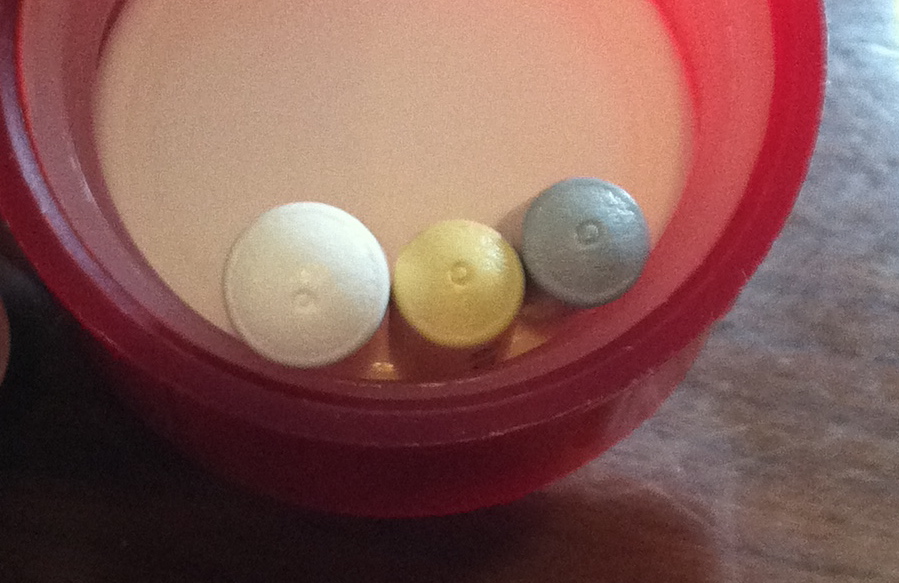
I just learned another company is making a generic for Concerta. A patient suddenly found the medicine to be not effective. It looked entirely different, so suspected it was the wrong medication. The pharmacist confirmed that it is another generic for Methylphenidate HCl ER from Kremers Urban Pharmaceuticals. The parent sent me this picture of the 18mg pill and I found the 27mg on the Kremers website:
From http://www.kremersurban.com/products/Product_Details.aspx?ProdName=MetaT&ProdID=62175-311-37

If your pharmacist says he can't order a drug because of a shortage, you can check to see predictions of how long the shortage will last at ASHP.org. Be sure to look closely for the generic name and if it is an extended or immediate release form because it can be confusing.

Update 12/12/13:

Watson Pharmaceuticals will now be called Actavis, so ask for the OROS pill instead of a brand. I think I will do a whole new blog on this topic since there are so many updates since April. Watch for it!

This is a great resource on the difference in authorized vs true generics: An Update on Generic Concerta.

Update 5/1/14:

I'm excited to hear that the FDA has this issue on their watch list. Please read Gina Pera's We Did It! Concerta Generics on FDA Watch List.

Update 11/16/14:

Generics that are non-OROS will no longer be automatically substituted. They will still be available. See ADHD Roller Coaster's blog on the topic for details.

Resources:


The Pre-MMA 180-Day Exclusivity Punt? What Gives? A legal blog explaining how medicines lose their exclusivity and can become generically available, specifically the Concerta dispute.

How To Tell The Difference Between Concerta and Generic Concerta A Canadian ADHD blog provided the picture of how to recognize the difference. Generic formulations have been available in Canada years prior to in the US.

Special thanks to the members of the Child-Pharm listserv!

Saturday, July 21, 2012

Health Insurance Woes

Insurance is an expensive benefit for employers and families, but the coverage is so variable it's difficult to navigate the whole healthcare thing. I am a pretty well informed consumer, given that I hear patient concerns often about how much things cost and if something will even be covered or not. I often change prescriptions due to insurance formularies or have a nurse call a script to change to a cheaper pharmacy. I know these things happen, but even informed consumers can get caught off guard.

My family's health insurance changed April 1st, and I dutifully put the new card in my wallet but didn't read anything about the new plan. The new plan was chosen by my husband's company as the best deal they could get. We both work for small companies, so insurance deals are not great. I didn't make the time to read about the formulary or what pharmacies are preferred. Or even if they offer or require mail order pharmacies. (Typical consumer mistake.)

I had dropped off 2 prescriptions that members of my family have been on for quite awhile on Saturday, March 31st, but didn't have time to pick them up that day. I returned Sunday to pick them up and realized that my new insurance had kicked in that day, so gave my new card. 

Drug A had been $4 previously and was now $10.
Drug B had been $10 previously and was now $75. 
Both are generic!

The next month I forgot to look into pharmacies. A little busy, you know.  So my old cost of $14 was now $85 monthly. A difference of $852/year. I made a mental note that I really had to make the time to look into things. 

Finally in June I looked up preferred pharmacies on the insurance plan's website.  The pharmacy I have used is not on the list, but another close to home is, so I changed our prescriptions to the "preferred" pharmacy.

Drug A is now $15.
Drug B is still $75.
The preferred pharmacy is actually MORE money!

How can consumers win?

My next step could be to look closely at the formulary to see if they have another medicine in the same category that is less expensive, but it is already a generic, so I am doubtful. And I know that this medicine has been working well for about a year. If we change to another medicine it might not work as well and there is a history of a bad reaction to another medicine in this category for my family member, so changes are concerning.

So I will probably suck it up and pay $75 for one generic medicine. And I will go to the non-preferred pharmacy so the other generic is less expensive. I am thankful I can afford these because I know many go without needed prescriptions. 

I might call around to other pharmacies to see how much they cost, but that can be time consuming and may or may not be fruitful.  I hate to waste precious time. But $75 a month for a generic is crazy to me. Does anyone agree that this should not be so difficult?

Thanks for letting me rant. 


Monday, February 6, 2012

Remembering Vitamins and Medications

Compliance taking a daily medication (or vitamin) can be troublesome for many.  I find myself counseling parents and kids how to remember medicines often.  Here are my favorite tips:


  • Use a pill box for pills. They come in various sizes and either single daily dosing or am/pm dosing, depending on your needs.  Pill boxes allow you to: 
  1. be sure you have enough for the upcoming week,
  2. remember if they were taken today,
  3. keep several types of pills for each day together if taking more than one pill.  
  • Liquid medicines: Wash the syringe after each use. Empty the dish drain of all contents daily so you find the syringe and remember to use it.  Or put a clean syringe in visible sight where you often look (tape it to the milk jug, in a glass next to the kitchen sink, in a glass near your coffee pot).  Remember the medicine needs to be out of reach from kids... not necessarily the syringe! 
  • Refrigerated medicines: Put the medicine on a shelf that is eye-level, right in front. Don't let it get pushed to the back. Return the bottle to the fridge before giving the medicine to lessen the chance you leave it on the counter.  Remind older children that can access the refrigerator that the bottle is off limits!
  • Keep medicine next to something you do daily (coffee, toothbrush). *Always keep out of reach of young children.*
  • Use a specific glass that is unique that goes from table to dishwasher to table and never is put away.  Every time you empty the dishwasher, put water in the glass and set it on the table for medicine.
  • Refill the medicine 1 week before you run out.  This allows you flexibility in case you forget to pick it up. It also allows recognition that there are no refills if that was missed, giving one week to see your doctor.  You can have enough for vacations if you routinely do this, since you can only fill one week earlier than the last fill... plan ahead if travelling!
  • Keep tabs on number of refills left. The pharmacist should let you know with each refill how many are left. If there are none, call right then to set your next appointment if you haven't already.
  • Set your phone or watch to alarm at the times the medicine is due.  Change the tone to one that is unique to remind you.
  • Put a reminder on your calendar to call for refills and/or schedule appointments before the last minute.
  • Leave sticky notes around the house or in your bathroom and kitchen if necessary!
  • Keep some medication in your purse (or at the school nurse) to take if forgotten in the morning if this might still be a problem.  Remember to not leave your purse in the car or other places the medicine will get too hot or cold.  If the school nurse will keep some, be sure to ask for a nurse's note when getting the prescription.
  • If you travel often, it helps to keep an empty pill box in your toiletry bag, so when packing it you see the empty box that needs to be filled.  Or you could put a sticky note in the toiletry bag reminding you to pack them.
  • Grab a pen/marker and draw a "calendar" (Mon am/pm, Tues am/pm, ...) on the bottle with space to check off when you've given the medicine each day. 
Regular prescription medications goes hand in hand with regular follow up with your doctor to manage the medication dosing. This is important for many reasons, so I try to give as many refills that will be needed until the next visit.  Ask your doctor how they handle refills before the medicine runs out so there are no delays in treatment.  Remember to schedule your next visit!
  • If able, schedule the next visit before you leave the doctor's office.  Bring your calendar to each visit!
  • Call as soon as you can to schedule if you don't have your calendar available at the doctor's office or you were unable to schedule for any reason.
  • If you notice no more refills on the bottle when picking up your medicine, call that day to schedule an appointment.  The later you wait, the fewer appointment times will be available. Early morning and later in the day fill first!
  • If you are filling the prescription at a time that your doctor's office is closed, look for options for them to call you.  Some offer online appointment requests.  You can request appointments from our website at any time day or night. Leave the best numbers for us to call during business hours.  Many offices have a voice mail that allows leaving a message for them to call you to schedule an appointment.
Once habits form, it is easier to remember, but until then be sure to set reminders-- especially if the medication must be taken at a certain time each day or if missed doses can be dangerous.  Learn what to do if you forget a dose by talking with your doctor or pharmacist. Some medicines are fine to skip a dose, others are not so forgiving and must be taken as soon as remembered.  

I hope this helps!  What tricks have you learned to remember your medicines?